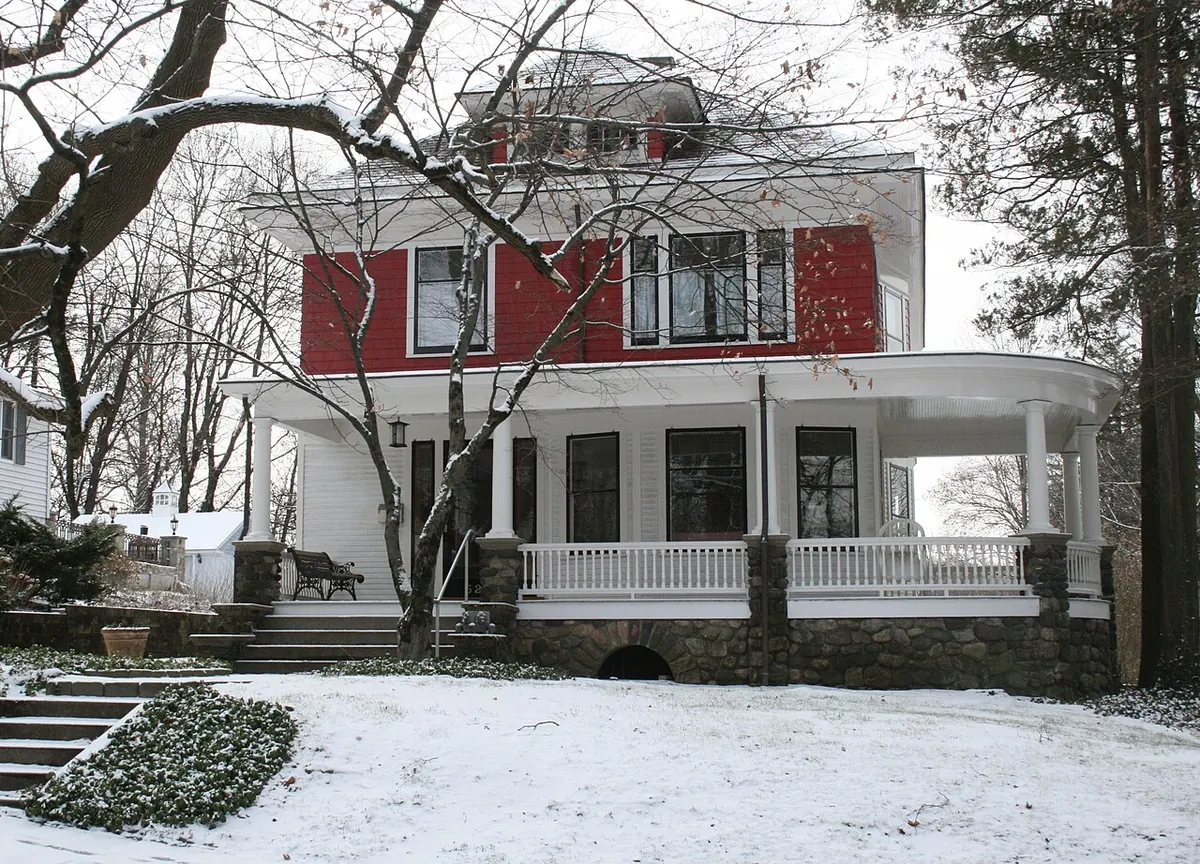
How ice dams cause interior damage
An ice dam forms when the upper roof is warm enough to melt snow but the eaves are cold enough to refreeze it. Meltwater pools behind the ridge of ice and works its way under shingles, into the soffit, down the inside of exterior walls and through ceilings. Damage often appears far from where water entered.
Snow load and collapse
In January and February 2011, repeated heavy snowfalls caused roof failures on homes, barns and commercial buildings across Connecticut. The February 2013 blizzard dropped well over two feet on much of the state. Flat roofs, older barns and additions with undersized framing are the most vulnerable.
What we scope
- Interior ceiling, wall and floor damage along the path of the water
- Wet insulation in attics and wall cavities, which is easy to miss and expensive to leave
- Damaged soffits, fascia and gutters torn off by ice
- Roof decking and shingle damage at the eaves, and ice-and-water shield required by code on replacement
- Structural repairs and shoring after a partial collapse
Frequently asked questions
Are ice dams covered by homeowners insurance?
Interior damage from ice dam leaks is commonly covered. Removing the ice and correcting ventilation or insulation problems may not be. Policy wording controls.
Is a roof collapse from snow covered?
Collapse caused by the weight of ice or snow is commonly covered under homeowners forms, subject to policy terms and exclusions.
Should I hire someone to remove ice dams?
Removing snow and ice safely is reasonable mitigation and the cost may be reimbursable. Avoid damaging shingles with picks or hammers, and keep receipts.