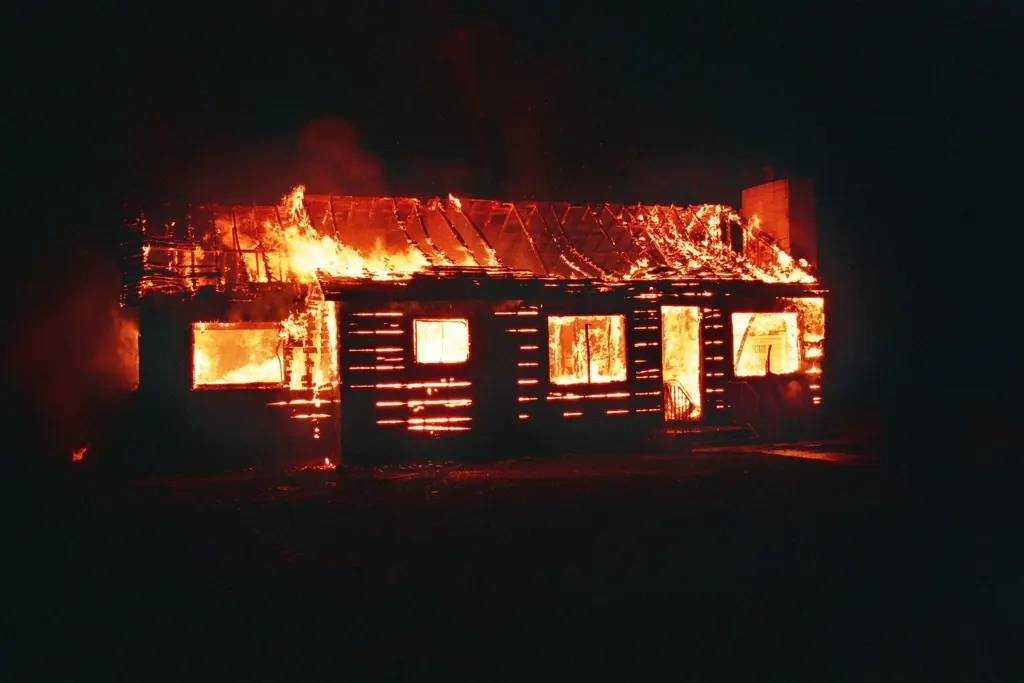
Fire losses in Connecticut homes
Older Connecticut houses with wood stoves, fireplaces and aging wiring see a steady stream of chimney and electrical fires, especially in winter. Balloon-framed homes, common in older neighborhoods, can let fire and smoke travel through wall cavities from basement to attic.
What we look at
- Direct fire damage. Framing, sheathing, roofing, windows and finishes in the burned area.
- Smoke and soot. Smoke reaches rooms far from the fire through HVAC ducts, wall cavities and attics. Cleaning, sealing and repainting, or replacement, must be scoped room by room.
- Odor. Lingering odor in insulation and framing often requires removal, not deodorizing.
- Code upgrades. Rebuilding may trigger electrical, insulation and egress requirements. Ordinance-or-law coverage may pay for some of them.
- Contents. A room-by-room inventory with replacement pricing and reasonable depreciation.
Total losses
When a house is destroyed, the dispute usually turns on the replacement cost of a comparable home: quality of finishes, square footage, custom features and site work. We build that value from the ground up rather than relying on a cost-per-square-foot shortcut.
Frequently asked questions
Can smoke-damaged items be cleaned instead of replaced?
Sometimes. The question is whether cleaning restores the item to its pre-loss condition. If it doesn’t, replacement may be appropriate. We document the reasoning.
Does appraisal cover my contents claim?
Yes, if the dispute is about the value of covered contents. Large contents claims benefit from a well-organized inventory before appraisal starts.
What is ordinance-or-law coverage?
It pays for added costs to bring rebuilt parts of the house up to current code, subject to its own limit. Not every policy includes it or includes enough.